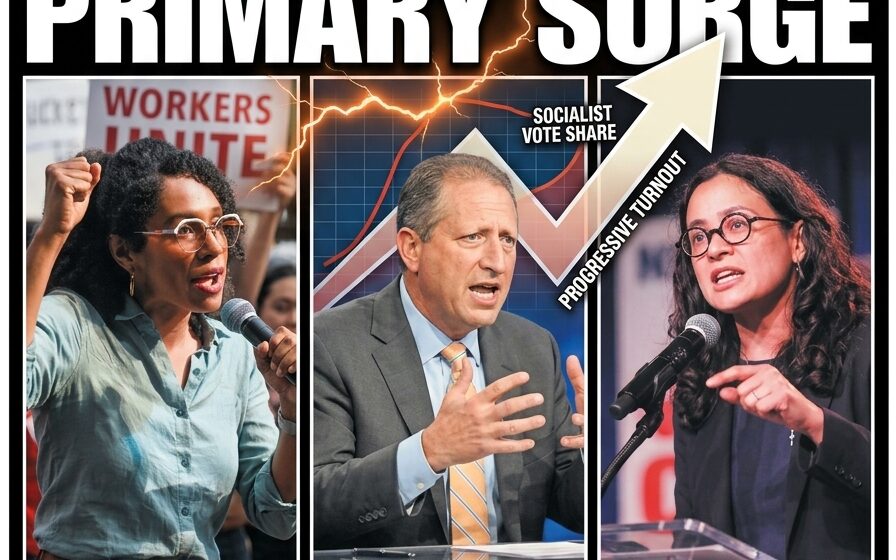

A wave of progressive and democratic socialist primary victories in New York has triggered a major debate inside the Democratic Party over what really drove the left’s latest surge.
Supporters of New York City Mayor Zohran Mamdani and the Democratic Socialists of America say the results show that voters are demanding a new economic agenda focused on affordability, housing, childcare, wages, and public services.
But critics and some Democratic insiders argue that another issue played a major role: anger over Israel’s war in Gaza and growing pro-Palestinian sentiment among Democratic primary voters.
The debate intensified after Mamdani-backed candidates defeated several establishment Democrats in key New York races. Darializa Avila Chevalier defeated longtime Rep. Adriano Espaillat in New York’s 13th Congressional District. Former New York City Comptroller Brad Lander defeated Rep. Dan Goldman. Claire Valdez also won a major primary contest, giving the left a strong showing across the city.
The victories were a major sign of Mamdani’s growing influence. Since becoming mayor, the democratic socialist has tried to turn his own political success into a broader movement capable of reshaping Democratic politics beyond City Hall.
Mamdani and his supporters say the wins prove that voters want leaders who will focus on the cost of living. Their message includes rent relief, free childcare, stronger public services, higher wages, and a government that directly helps working-class residents.
That argument has clear political power. New York remains one of the most expensive places to live in the United States. Many residents feel squeezed by rent, groceries, transportation, healthcare, and childcare. For voters struggling with daily costs, the promise of a more active government can be appealing.

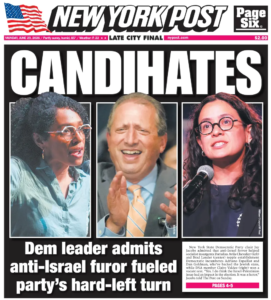
However, the New York Post reported that several Democratic figures and political experts believe affordability was not the only force behind the results. They argue that anger over Israel and U.S. policy in the Middle East helped energize activist voters in low-turnout Democratic primaries.
That claim reflects a larger shift inside the Democratic base. Polling has shown that Democratic voters have become increasingly critical of Israel, especially after the war in Gaza. Younger voters and progressive activists are especially likely to view the issue as central to their politics.
The Israel-Palestine debate has become one of the most divisive issues inside the Democratic Party. Some progressives frame their position as a human rights stance against war, occupation, and civilian suffering. Critics, including some Jewish leaders and pro-Israel Democrats, argue that parts of the movement have crossed the line into hostile or antisemitic rhetoric.
That disagreement is now shaping primaries. Candidates who take a strongly pro-Palestinian position may gain energy from progressive activists, while candidates who support Israel more firmly may face pressure in deep-blue districts.
The New York results show how powerful that divide can be. In heavily Democratic areas, a motivated primary electorate can decide the outcome even when overall voter turnout is low. A focused activist base can defeat an incumbent if the incumbent is seen as out of step with the district’s mood.
For moderate Democrats, the results are alarming. They worry that Republicans will use democratic socialist victories to brand the entire party as extreme. They also fear that controversial foreign policy statements, police reform positions, or anti-capitalist messaging could damage Democrats in swing districts and statewide races.
Some centrists have already begun pushing back. Moderate Democrats argue that the party must remain focused on broad issues such as jobs, safety, healthcare, democracy, and economic stability. They warn that moving too far left may help Republicans in competitive areas.
Progressives reject that warning. They argue that cautious, establishment politics has failed to deliver enough for working people. They say voters are frustrated because promises about affordability, housing, and healthcare have not translated into meaningful improvements.
That is why the debate over New York’s socialist surge matters nationally. It is not only about one city or one set of primaries. It is about the future identity of the Democratic Party.
Is the party moving toward a new economic populism led by democratic socialists and younger activists? Or will moderate Democrats regain control by arguing that the left’s message is too risky for national elections?
The truth may be that both affordability and foreign policy played a role. Economic frustration gave the movement a broad message. Anger over Gaza and Israel policy may have provided additional energy among highly engaged progressive voters. Mamdani’s personal popularity and campaign organization also helped turn that energy into real electoral wins.

That combination is difficult for establishment Democrats to counter. It mixes local economic pain, national political anger, social media activism, and a younger voter base that no longer feels loyal to older party leaders.
The biggest question now is whether these victories can translate beyond progressive districts. Winning a Democratic primary in New York City is not the same as winning a swing-state general election. But movements often begin in safe districts before spreading into wider politics.
For now, Mamdani and his allies have momentum. Their candidates won, their message is being discussed nationally, and their influence inside New York politics has grown.
But the backlash is also growing. Moderate Democrats, pro-Israel groups, conservatives, and some older party leaders are warning that the party could face serious consequences if democratic socialism becomes its public face.
New York’s latest primaries have therefore become more than local political contests. They are a preview of a larger fight over the Democratic Party’s direction, its relationship with Israel, its economic message, and its ability to speak to voters who feel angry, ignored, and financially trapped.
Whether the socialist surge was driven more by affordability, Gaza, anti-establishment anger, or Mamdani’s organizing power, one thing is clear: the Democratic Party can no longer ignore the leftward pressure building in its own base.