Talent-show auditions are built around one simple question: What is the contestant going to do?
Sometimes the answer seems obvious from the moment someone walks onto the stage. But every once in a while, a performer completely destroys those expectations.
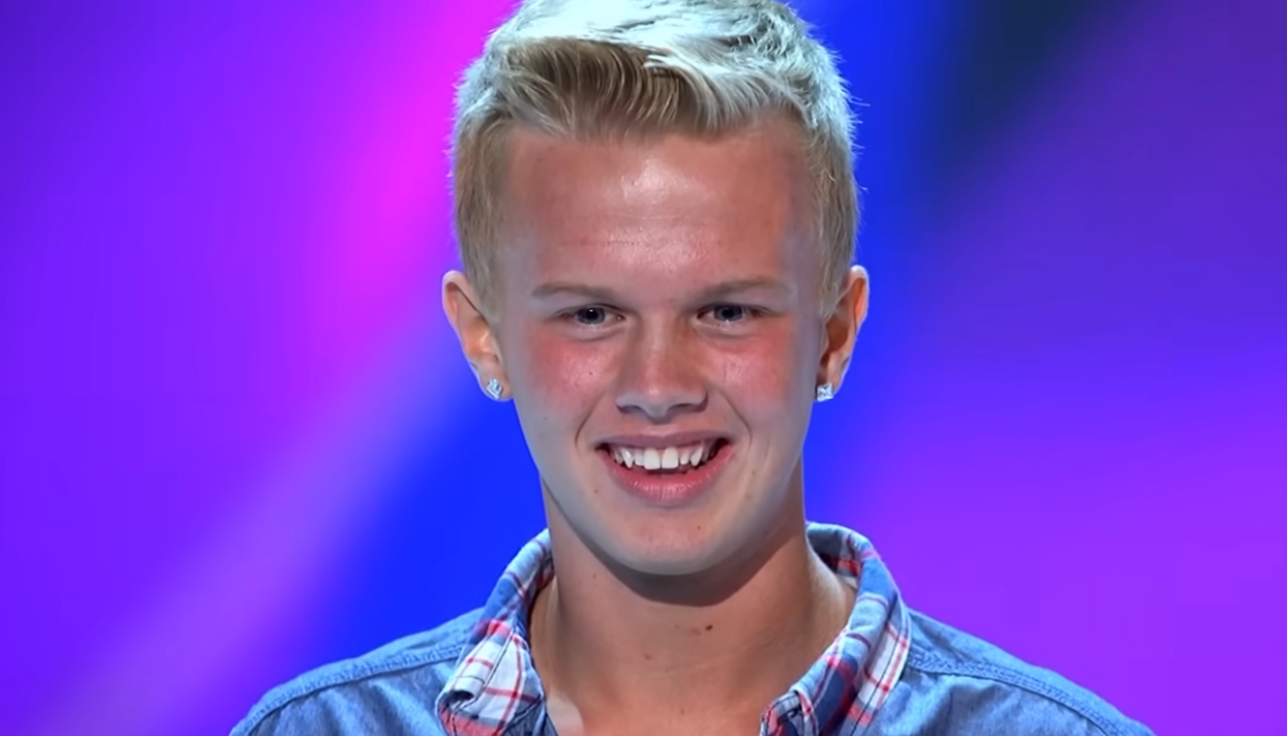
That is exactly what happened when 18-year-old Rizzloe Jones appeared on The X Factor USA.
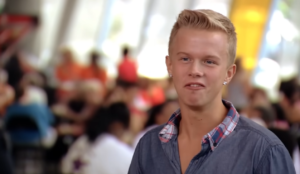
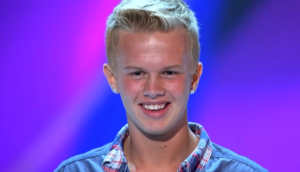
The Kansas City teenager walked onto the stage with a clean-cut appearance and an easygoing personality. Nothing about his introduction prepared the judges for what was coming.
There was even speculation at the judges’ table that he might be preparing to sing country music.
They couldn’t have been more wrong.
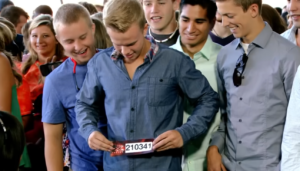
Rizzloe wasn’t there to perform a familiar country ballad or deliver a carefully rehearsed cover of a famous pop song.
He was there to freestyle.
And that meant creating his rap in real time.
The Judges Had No Idea What Was Coming
Standing in front of a television audience is difficult enough when a performer has spent weeks rehearsing every note.
Freestyle rap adds another level of pressure.
Instead of memorizing lyrics, the performer has to listen, think and create rhymes almost instantly while remaining on beat.
One mistake can derail the entire performance.
Rizzloe appeared willing to take that risk.
When he explained what he planned to do, the mood immediately changed. The judges were no longer waiting for another conventional singing audition.
They wanted to see whether this teenager could actually deliver.
Rather than simply accepting his claim that he could freestyle, they put his ability to the test.
Random ideas were thrown his way.
Among them were “marshmallows” and “X Factor.”
Those words would become material for his performance.
Then the Beat Started
As soon as the music began, Rizzloe transformed.
The polite teenager speaking with the judges suddenly looked completely comfortable performing in front of the room.
He began creating rhymes on the spot, incorporating the ideas he had just been given.
That was the crucial part of the audition.
Anyone can claim that a rap is improvised. By accepting random prompts from the judges and immediately incorporating them into his performance, Rizzloe demonstrated that he was genuinely reacting to what was happening around him.
The performance also gave him an opportunity to interact directly with the judging panel.
Britney Spears became part of the freestyle itself, creating one of those spontaneous television moments that would be almost impossible to reproduce with a completely scripted performance.
The audience responded quickly.
What had started with curiosity turned into excitement.
More Than Just Fast Rhyming
Freestyle rap isn’t simply about finding two words that rhyme.
A successful freestyle performer has to manage several things simultaneously.
There is rhythm.
There is timing.
There is vocabulary.
There is audience awareness.
And perhaps most importantly, there is confidence.
A performer has only seconds to decide where the next line is going while making the previous line sound intentional.
That is why Rizzloe’s age made the audition especially memorable.
At just 18, he was demonstrating a skill that depends heavily on the ability to remain calm under pressure.
The national television stage could have overwhelmed him.
Instead, it appeared to energize him.
The Judges’ Expectations Were Completely Reversed
Part of what makes talent-show auditions memorable is contrast.
If everyone expects greatness and greatness arrives, the performance can still be impressive.
But when expectations point in one direction and the contestant suddenly goes somewhere completely different, the surprise becomes part of the entertainment.
Rizzloe’s audition had exactly that quality.
His appearance apparently suggested one type of performer to the judges.
His actual talent revealed another.
Britney Spears, Demi Lovato, L.A. Reid and guest judge Louis Walsh watched as the teenager worked through his freestyle.
By the end, the question was no longer whether he could really improvise.
He had demonstrated it in front of them.
The audition ultimately earned positive votes from the judging panel and allowed Rizzloe to continue in the competition.
His Journey Almost Never Happened
One of the most interesting details surrounding Rizzloe’s story is that The X Factor reportedly wasn’t originally the competition he expected to encounter.
In later interviews, he explained that he had gone along with a friend and initially believed the opportunity involved another television talent competition.
Once they realized what was happening, his friends encouraged him to audition.
That spontaneous decision put him on a national television stage.
It’s an important part of the story because successful auditions often look inevitable when viewed years later.
They aren’t.
Sometimes a memorable television moment begins with someone simply deciding to take an unexpected opportunity.
For Rizzloe, saying yes meant putting his freestyle ability in front of millions of viewers.
Simon Cowell Wasn’t at the Judges’ Table
Viewers who remember this era of The X Factor may also notice an unusual detail about Rizzloe’s audition.
Simon Cowell was absent from this portion of the auditions.
The judging panel included Britney Spears, Demi Lovato, L.A. Reid and Louis Walsh, who was filling in during Cowell’s absence.
It was a distinctive lineup for a performance that would become one of the more unusual auditions of the season.
Rather than evaluating vocal range or whether someone had hit a difficult note, the judges were evaluating creativity, personality, stage presence and Rizzloe’s ability to think immediately.
Why the Audition Still Works Years Later
Talent-show television has produced thousands of auditions.
Powerful singers hit enormous notes.
Dancers perform complicated routines.
Magicians create illusions.
Comedians deliver punchlines.
But surprise remains one of the most powerful ingredients in a memorable performance.
Rizzloe had it.
His audition didn’t require an enormous stage production or complicated special effects.
The central idea was remarkably simple: Give an 18-year-old rapper random material and see what he can create.
That simplicity made the performance easy to understand.
The audience knew the challenge.
The judges knew the challenge.
And Rizzloe had to prove himself immediately.
Every successful line made the next one more exciting because viewers understood that he was creating the performance as it unfolded.
Never Judge the Performer Before the Performance
There is also a broader reason the audition remains entertaining.
It demonstrates how quickly assumptions can be wrong.
The judges looked at Rizzloe and formed an idea about what kind of performer he might be.
Within minutes, that idea had disappeared.
He didn’t need to fit the image people expected.
He simply needed an opportunity to demonstrate what he could do.
That’s a lesson that extends far beyond reality television.
Talent doesn’t always arrive packaged the way people imagine it should.
Sometimes the quiet teenager has the fastest freestyle.
Sometimes the contestant expected to sing country music starts rapping instead.
And sometimes an audition that appears ordinary for its first few seconds becomes the performance people remember years later.
For Rizzloe Jones, all it took was a stage, a beat and a few random words.
Then he did the rest himself.