
Oxford University is facing renewed scrutiny over donations connected to the late Max Mosley, after fresh reporting raised questions about how senior figures at the university sought and accepted money from the Alexander Mosley Charitable Trust.
The controversy centers on donations linked to Mosley, the former Formula One boss and privacy campaigner, whose family name has long been associated with one of the darkest chapters in British political history. Mosley was the son of Sir Oswald Mosley, the leader of the British Union of Fascists, and critics have argued that money connected to the family name carries a heavy historical burden.
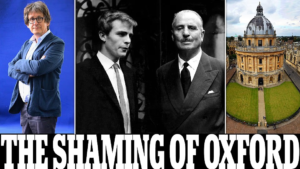
The latest dispute focuses partly on Alan Rusbridger, the former editor of The Guardian and former principal of Lady Margaret Hall at Oxford. Reports say emails show Rusbridger solicited financial support from Max Mosley while leading the college, including funding intended to help students from under-represented backgrounds.
Supporters of the funding argue that the money was used for educational access, student support, science, housing, and opportunity. They say the donations helped students who might otherwise have struggled to afford or access Oxford.
Critics, however, say the issue is not simply what the money was used for, but where it came from, how it was accepted, and whether Oxford properly considered the moral impact on Jewish students and others affected by the Mosley family legacy.
The Alexander Mosley Charitable Trust was set up in memory of Max Mosley’s son, Alexander, who studied at St Peter’s College and died in 2009. The trust has funded several academic and social causes, including Oxford-linked projects.
Previous reports show that Oxford University accepted £6 million from the trust to create the Alexander Mosley Professor of Biophysics Fund. St Peter’s College accepted millions more for student accommodation, while Lady Margaret Hall received funding connected to its foundation year programme.

Those donations triggered major criticism in 2021. Oxford Jewish Society and the Union of Jewish Students said they were distressed that Oxford and some of its colleges had accepted money from the Alexander Mosley Trust. They argued that the Mosley family name was synonymous with fascism and antisemitism in Britain and warned that naming academic or student facilities after the family could be seen as memorialising that legacy.
Oxford and the colleges involved defended their decisions at the time. They said donations had gone through review processes and were approved after considering legal, ethical, and reputational issues. St Peter’s College also said the funds would help students by reducing dependence on Oxford’s expensive private rental market.
The college later said the accommodation building would not carry the Alexander Mosley name and that students would be involved in choosing a name. That decision appeared to acknowledge the sensitivity of the issue, even as the college continued to defend the purpose of the donation.

The renewed controversy is likely to intensify debate over how elite universities handle gifts from controversial donors. Oxford, like many major institutions, depends on philanthropy to fund research, student support, buildings, scholarships, and academic posts. But large donations can create reputational problems when the donor’s background or source of wealth is disputed.
The Mosley case is especially sensitive because it touches not only on individual conduct, but also on inherited wealth, historical responsibility, fascism, antisemitism, and the role of public memory inside universities.
Some critics argue that accepting the money gives the Mosley name a form of respectability it does not deserve. They say universities should not separate a donation from the history attached to it when that history involves extremist politics and harm to minority communities.
Others argue that money can be used for public good even when the donor’s family history is controversial. They say scholarships, student accommodation, and access programmes can directly benefit young people from disadvantaged backgrounds.
The debate also raises a broader question: should universities judge donations mainly by their present use, or should they also judge them by the origins of the donor’s fortune and the symbolic meaning attached to a name?
For Oxford, the issue is not likely to disappear quickly. The university has spent years trying to present itself as more inclusive and socially aware, while also confronting difficult questions about colonial history, race, antisemitism, class, and institutional privilege.

Accepting money linked to the Mosley name has therefore created an uncomfortable contradiction for critics. They argue that a university committed to inclusion should be especially cautious about donations tied to Britain’s fascist past.
At the same time, defenders of the donations say the funds were reviewed, legally accepted, and directed toward causes that align with Oxford’s widening-access mission.
The latest reporting puts new pressure on Oxford and former college leaders to explain not only what was accepted, but how actively the money was pursued. If university figures solicited the donations enthusiastically, critics may argue that the ethical review process was not enough to address the deeper moral concerns.
The controversy is ultimately about more than one donor. It is about how powerful institutions decide whose money is acceptable, whose history matters, and whether good causes can wash away a toxic legacy.
As Oxford continues to face questions, the Mosley donations may become a defining case in the debate over donor ethics in higher education.