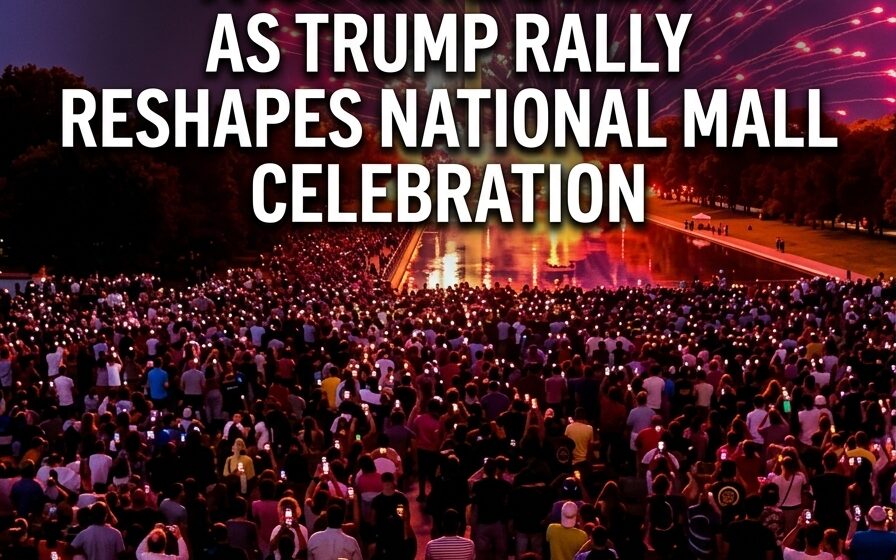

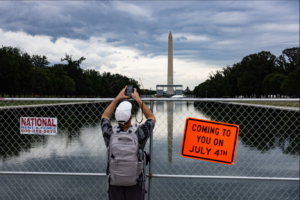
Washington, D.C.’s Fourth of July fireworks are expected to start much later than usual this year as President Donald Trump’s America 250 celebration turns the National Mall into the center of a massive political and patriotic event.
The annual fireworks show in the nation’s capital is usually one of the most family-friendly Independence Day traditions in America. Crowds gather around the National Mall, the Lincoln Memorial, the Washington Monument, and nearby viewing spots to watch the sky light up over Washington.
But this year’s celebration is different.
The fireworks display, tied to America’s 250th anniversary, is now expected to begin around 10:30 p.m. or possibly closer to 11 p.m., depending on the final event schedule. That is much later than the traditional start time, which is usually around 9 p.m.
The delay has drawn attention because the fireworks are expected to follow a large Trump-led celebration on the National Mall. Trump has promoted the July 4 event as a “Tribute to America” and has called it a major “TRUMP RALLY,” adding a political edge to what is normally a national holiday celebration.
The event is part of the broader Freedom 250 programming, which marks the 250th anniversary of American independence. Organizers have described the celebration as a patriotic showcase featuring military bands, flyovers, music, and a large fireworks display near the Lincoln Memorial and Washington Monument.
The fireworks show is expected to be one of the largest in U.S. history. Reports say the display could include hundreds of thousands of fireworks shells and last around 40 minutes, far longer than a typical D.C. Fourth of July show.
For supporters, the event is being promoted as a historic and unforgettable celebration of America’s birthday. They say the country’s 250th anniversary deserves a large-scale tribute with military pageantry, music, patriotic imagery, and a record-breaking fireworks display.
Critics see it differently. They argue that Trump has turned a national celebration into a campaign-style political event, blurring the line between official government commemoration and personal political branding.
That concern grew after Trump described the event as a rally and said it would include music from his own rally playlists. Opponents say the National Mall should be a space for all Americans, not a stage for one political figure’s movement.
The late fireworks start has also raised practical concerns for families. D.C. Mayor Muriel Bowser said she expects many families with young children to watch the fireworks on television instead of staying late on the National Mall. A fireworks show beginning near 11 p.m. would make it difficult for parents, children, older visitors, and people using public transportation.
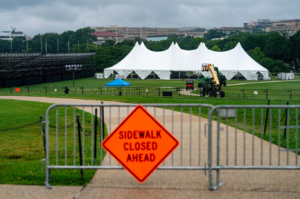
The schedule could also create challenges for crowd control, Metro service, road closures, and public safety. Large crowds are expected, and visitors are being urged to arrive early, prepare for long security lines, and use public transportation instead of driving.
Security will be unusually tight this year. The July 4 fireworks and related America 250 events have been designated as a National Security Special Event, giving federal agencies a larger coordination role. That means visitors should expect airport-style screening, magnetometers, restricted zones, road closures, and a heavy law enforcement presence.
Federal and local officials have said they are preparing for hundreds of thousands of visitors. Agencies involved in planning include the Secret Service, FBI, U.S. Park Police, U.S. Capitol Police, D.C. National Guard, and local law enforcement.
Authorities have said they are not tracking any credible threat tied to the July 4 events, but the scale of the celebration and the current political climate have made security planning especially complex.
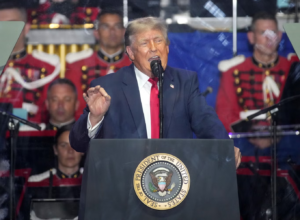
The event also comes during a tense period in American politics. Trump remains one of the most polarizing figures in the country, and his decision to place himself at the center of the 250th anniversary celebration has intensified debate over the meaning of the holiday.
For many Americans, July 4 is supposed to be a unifying moment focused on independence, history, military service, community, and national identity. But in 2026, even the fireworks schedule has become part of a broader political argument.
Some residents and visitors may simply see the later fireworks as a logistical inconvenience. Others see it as a symbol of how America’s 250th birthday has become wrapped up in Trump’s political brand.
The official Freedom 250 schedule lists the fireworks at around 10:30 p.m. Eastern Time and says the show will last approximately 40 minutes. However, local officials have suggested the actual start could be closer to 11 p.m., depending on how the evening unfolds.
For anyone planning to attend, the key advice is simple: check the latest schedule before leaving, arrive early, bring patience, expect security delays, and prepare for a late night.
The fireworks may still deliver a spectacular show over the nation’s capital. But this year, the timing, politics, and scale of the event have turned D.C.’s July 4 celebration into much more than a traditional fireworks night.
As America marks 250 years of independence, the delayed D.C. fireworks show reflects the larger mood of the country: patriotic, historic, crowded, emotional, and deeply divided.