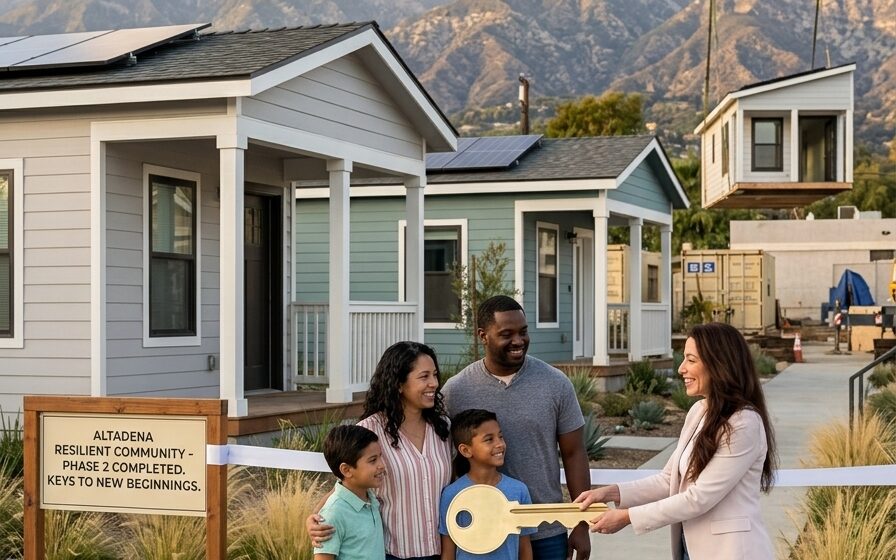

Altadena fire survivors are celebrating two hopeful developments in their long and difficult effort to rebuild after the devastating Eaton Fire.
More than a year after flames destroyed homes, displaced families, and reshaped one of Los Angeles County’s most historic communities, residents are still fighting to return home. This week, that fight gained new momentum in two very different ways: one through state legislation in Sacramento and another through a local model home meant to show how rebuilding could move faster.
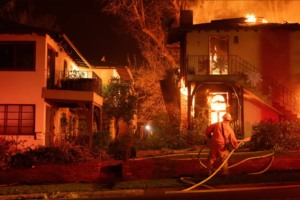
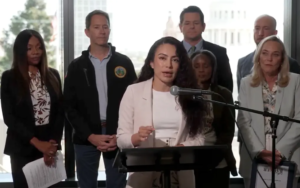
The first victory centers on Senate Bill 1090, also known as the Keep Altadena Land in Altadena Hands Act. The bill is designed to temporarily protect Altadena from certain fast-track housing density laws while the community recovers from the Eaton Fire.
Supporters say the measure would give displaced homeowners more time and stability as they deal with insurance claims, construction costs, permit rules, and the emotional weight of rebuilding. They argue that without temporary protections, outside investors could buy burned lots from distressed families and use state housing laws to quickly pursue denser projects that change the character of the neighborhood before survivors have a real chance to return.
SB 1090 focuses on Altadena ZIP codes 91001 and 91003 and would pause certain ministerial approval requirements tied to SB 9 and SB 1123 for a limited recovery period. Those state laws were created to increase housing supply across California by allowing more residential density, lot splits, and certain streamlined housing projects.
But many Altadena residents say the post-fire situation is different from ordinary housing development. Their concern is not only density itself, but timing, disaster pressure, and whether speculators are using a tragedy to reshape neighborhoods before longtime residents can make informed decisions about rebuilding.
The Eaton Fire left many families underinsured, displaced, and unsure whether they could afford to rebuild. Some residents are still waiting on insurance payouts, loans, lawsuits, permits, or contractor estimates. In that environment, community advocates say homeowners may feel pressured to sell land quickly.
That is why SB 1090 has become a rallying point. Supporters see it as a temporary shield, not a permanent ban on new housing. They argue that Altadena needs time to rebuild thoughtfully, preserve its cultural identity, and keep longtime families from being priced or pressured out.
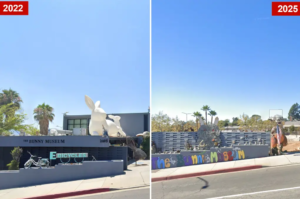
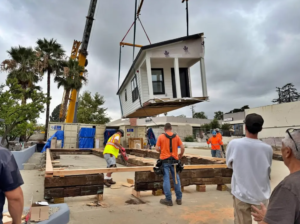
The second hopeful sign came back home in Altadena, where a modular model home connected to The Bunny Museum became a visible symbol of recovery. The model home is meant to show residents how factory-built or modular construction could help speed up rebuilding after a disaster.
For survivors facing rising construction costs and long timelines, the idea of faster, pre-approved, or modular housing has become increasingly attractive. A model home gives people something physical to walk through, compare, and imagine as part of their own recovery plan.
That kind of practical demonstration matters. Rebuilding after a wildfire is not only about replacing walls and roofs. It is about helping people understand their options, estimate costs, navigate permits, and believe that returning home is still possible.
The Bunny Museum itself has become part of Altadena’s recovery story. Like many local landmarks and small businesses, it reflects the community’s unusual character and strong local identity. Hosting or supporting a model home near such a recognizable place gives the project a symbolic meaning beyond construction.
Together, the legislative push and the model home show two sides of Altadena’s recovery. One is political: residents organizing to influence state law and protect their neighborhoods. The other is practical: builders, advocates, and local institutions trying to show real-world solutions for getting families back on their land.
Both are important because Altadena’s rebuild is still uneven. Some homes are rising, permits are moving, and recovery networks are active. But many survivors remain stuck between hope and hardship.
Financial barriers remain one of the biggest obstacles. Even when permits are approved, families may struggle to start construction because insurance payments do not cover the full cost of rebuilding. Others face higher material costs, labor shortages, utility questions, or uncertainty about whether the rebuilt community will still feel like the Altadena they knew.
The debate also raises a larger question facing many disaster-hit communities: how do you rebuild quickly without losing what made the place special?
Housing advocates often argue that California desperately needs more homes, including more affordable and multifamily housing. That is true across much of the state. But Altadena residents supporting SB 1090 say disaster recovery must be handled carefully because survivors are not ordinary sellers in a normal market.
Their argument is that families should not have to compete with speculative developers while still grieving, waiting for insurance, and trying to understand complicated rebuilding rules.
Critics of restrictions on housing density may worry that pausing streamlined development could limit new homes during a statewide housing crisis. Supporters respond that the proposed protection is temporary and targeted to a community recovering from an extraordinary disaster.
For now, Altadena’s survivors are showing that recovery is not only about government aid or construction permits. It is also about community organizing, public pressure, local identity, and practical rebuilding tools.
The two wins this week do not solve every problem. Families still need money, permits, trusted builders, temporary housing, and long-term support. But they do show that Altadena is not passively waiting for recovery to happen.
Residents are fighting to shape it.
After the Eaton Fire, Altadena’s future remains uncertain. But with SB 1090 gaining attention and model homes offering a glimpse of what rebuilding could look like, survivors have new reasons to believe that returning home is still possible.