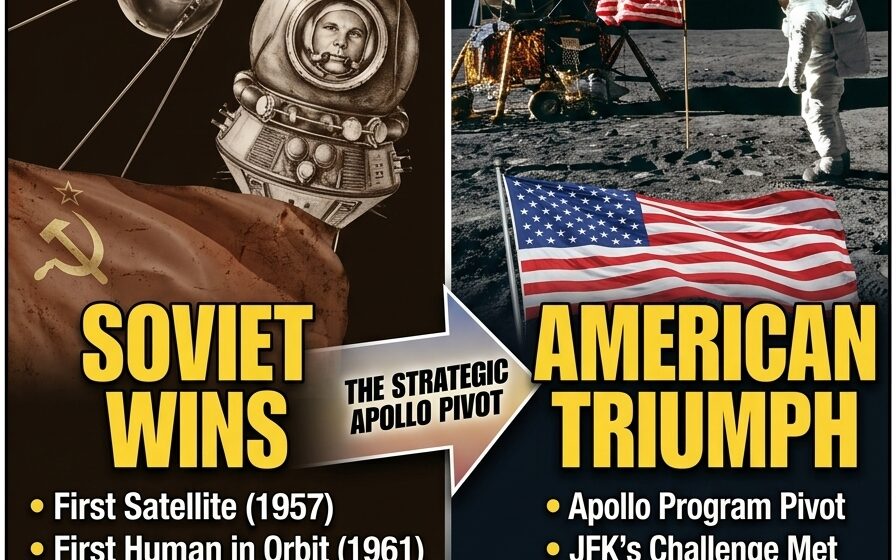

The Space Race was one of the most dramatic competitions of the 20th century, a Cold War battle fought not with tanks or missiles, but with rockets, astronauts, engineers, and national pride. For years, the Soviet Union seemed to be far ahead. But by the end of the 1960s, the United States had achieved the ultimate goal: landing humans on the Moon and bringing them safely home.
The race intensified on April 12, 1961, when Soviet cosmonaut Yuri Gagarin became the first human to travel into space and orbit Earth. His mission was a stunning success for Moscow and a major shock for Washington. According to the New York Post’s July 2, 2026 feature, Gagarin’s return to Earth included an unforgettable landing near a rural field in Russia, where locals encountered a man who had just come back from space.
At that moment, the Soviet Union appeared to dominate space exploration. The USSR had already launched Sputnik 1, the first artificial satellite, in 1957. It also achieved several other major “firsts,” including the first living creature in orbit, the first human in space, the first woman in space, and the first spacewalk. These achievements created fear and embarrassment in the United States, but they also pushed America to move faster. The Smithsonian’s National Air and Space Museum notes that the Soviet Union’s early successes triggered a major U.S. effort to catch up and surpass its rival.
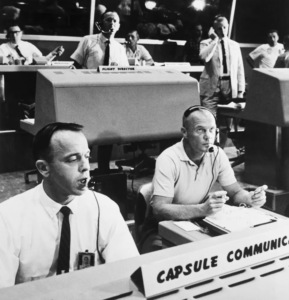
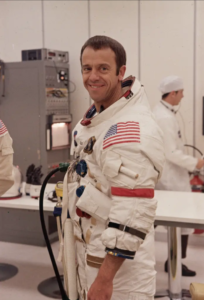
America’s response began with Project Mercury, which tested whether humans could survive and work in space. Alan Shepard became the first American in space on May 5, 1961, flying a short suborbital mission. Less than three weeks later, President John F. Kennedy made one of the most important promises in American history: the United States would land a man on the Moon and return him safely to Earth before the end of the decade. At the time, America had only a few minutes of human spaceflight experience, making the challenge seem almost impossible.
The key to America’s comeback was not one single mission, but a step-by-step strategy. After Mercury came Gemini, a two-person spacecraft program that helped NASA master the skills needed for a lunar landing. Gemini astronauts practiced long-duration flights, spacewalks, rendezvous, and docking — all essential techniques for reaching the Moon. Between 1964 and 1966, NASA flew ten crewed Gemini missions, building confidence and technical experience at a rapid pace.
Meanwhile, the Soviet space program began to face serious problems. Its Soyuz spacecraft was complex and difficult to perfect, while its Moon rocket, the N1, suffered repeated failures. The United States, on the other hand, developed the Saturn V, a powerful and reliable rocket capable of sending astronauts beyond Earth orbit. This difference became one of the major reasons America was able to move ahead in the final stage of the race.
The Space Race also came with tragedy. In 1967, three American astronauts — Gus Grissom, Ed White, and Roger Chaffee — died in the Apollo 1 fire during a ground test. That same year, Soviet cosmonaut Vladimir Komarov died when Soyuz 1 crashed during reentry. These disasters showed the world how dangerous space exploration was, but both nations continued.
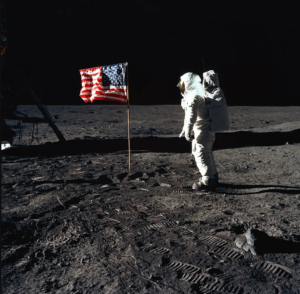
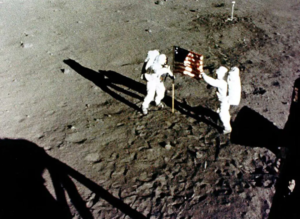
The turning point came with Apollo 8 in December 1968, when American astronauts became the first humans to orbit the Moon. It was a powerful sign that NASA was now ahead. Then, on July 20, 1969, Apollo 11 completed Kennedy’s promise. Neil Armstrong and Buzz Aldrin walked on the lunar surface while Michael Collins orbited above in the command module. The United States had won the race to the Moon.
Apollo 11 was more than a scientific achievement. It was a symbolic victory in the Cold War. It showed the world that the United States had the technology, organization, and determination to accomplish one of humanity’s greatest dreams. While the Soviet Union had won many early milestones, America won the most important prize: the first human landing on another world.
The Great Space Race remains a reminder that competition can drive extraordinary innovation. From Gagarin’s historic orbit to Armstrong’s first steps on the Moon, the story of the Space Race is a story of ambition, danger, failure, and triumph. In the end, America’s victory was built not on speed alone, but on persistence, planning, and the courage to aim for the impossible.