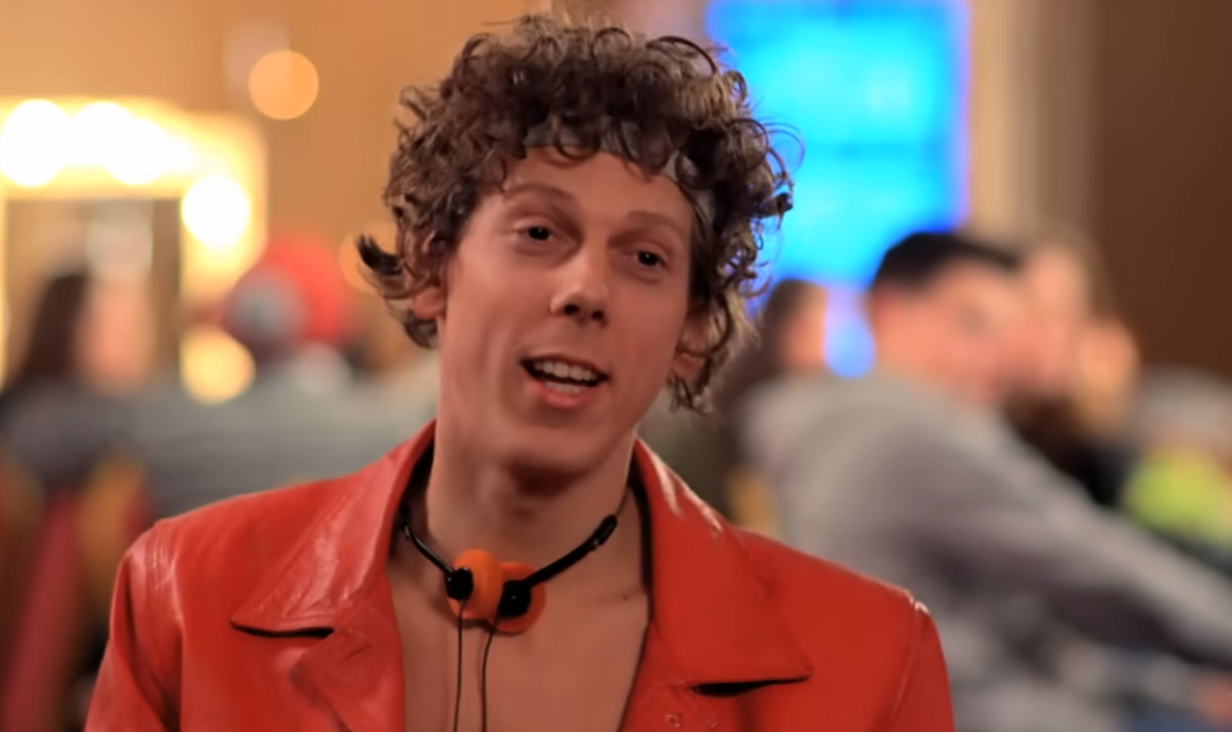
Most Britain’s Got Talent contestants walk onto the stage hoping to prove that they can follow the latest musical trends. Maarty Broekman arrived determined to travel in the opposite direction.
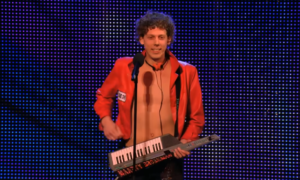
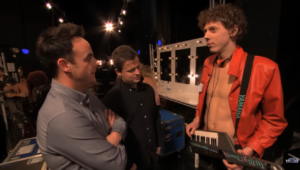
During his 2013 audition, Maarty appeared with a keytar, a flamboyant retro outfit and a clear mission to revive the sights and sounds of the 1980s. The official Britain’s Got Talent video presents the performance as his attempt to win over judge Alesha Dixon with his unusual instrument and playful personality.
From the moment he entered the theater, Maarty did not behave like a nervous unknown contestant. He appeared completely convinced that synthesizer-driven pop, theatrical fashion and portable keyboards were ready for a major comeback.
That confidence helped transform a strange musical idea into a highly entertaining television moment.
A Keytar Took Center Stage
A keytar combines an electronic keyboard with the portable shape and freedom of a guitar. Instead of remaining behind a traditional keyboard stand, the musician can move around the stage while playing.
The instrument became strongly associated with electronic pop and rock performers during the 1980s. For Maarty, however, it was not simply a nostalgic prop. It became the centerpiece of his entire performance.
His clothing, exaggerated movements and electronic sound all supported the same retro concept. The act felt less like a conventional singing audition and more like a character arriving from an old Euro-pop music video.
Maarty’s unusual approach immediately separated him from the more traditional singers appearing on the show.
The Performance Became a Playful Attempt to Charm Alesha
Maarty directed much of his performance toward Alesha Dixon, adding a flirtatious comedy element to the music.
ITV described the audition as his attempt to “woo” Alesha with the keytar. The playful interaction gave the act a clear story: Maarty was not merely singing an eccentric song—he was using the performance to win the judge’s attention.
The audience responded to his enthusiasm, while the judges appeared divided over whether they were watching genuine musical brilliance or an act that was simply too bizarre to ignore.
That uncertainty became part of the entertainment.
Maarty appeared completely comfortable with the unusual nature of his act. He did not apologize for the keytar, reduce his theatrical style or attempt to perform like a conventional pop singer.
Instead, he committed fully to the world he had created.
Three Judges Said Yes
Despite the divided reaction, Maarty received enough support to remain in the competition.
ITV confirmed that three members of the judging panel voted yes, while the fourth judge declined to send him forward.
The result demonstrated that a Britain’s Got Talent audition does not always need unanimous approval to succeed. Maarty’s act was memorable because it produced strong reactions and gave the audience something completely different from the performances surrounding it.
His success also showed that entertainment value can matter alongside technical ability. Even judges who may not have considered him the strongest vocalist could recognize his confidence, originality and ability to command attention.
From Unusual Audition to Live Semi-Finalist
Maarty’s journey continued beyond his first appearance.
He was eventually selected for the live semi-finals, where he returned with another 1980s-inspired keytar performance. The official Britain’s Got Talent channel described him as a “born ’80s entertainer,” reinforcing how closely his retro identity had become connected with his time on the show.
ITV later remembered him as a flamboyant, 1980s-obsessed semi-finalist and the “king of the keytar.” The program featured him again after his season when he recorded a new song supporting the following year’s contestants.
Although he did not win the competition, reaching the live stage was a significant achievement for such an unconventional act.
Maarty had entered with an instrument many viewers associated with a previous musical era and successfully turned it into the defining feature of a nationally televised performance.
Why the Audition Remains So Entertaining
The audition continues to attract viewers because Maarty possessed something that cannot easily be manufactured: a completely clear artistic identity.
He knew exactly what kind of performer he wanted to be.
The clothing matched the music. The movements matched the instrument. The humor matched the exaggerated personality. Every part of the performance belonged to the same colorful retro world.
That consistency made the act memorable even for viewers who were not fans of 1980s electronic pop.
Many contestants attempt to impress talent-show judges by copying successful contemporary artists. Maarty did the opposite. He embraced a style that appeared outdated to some people and presented it as though it were the future of music.
His confidence helped sell the idea.
An Audition That Refused to Follow the Rules
Maarty Broekman’s Britain’s Got Talent appearance demonstrated that originality can create a lasting impression even when the judges disagree about the quality of an act.
He did not deliver a predictable ballad.
He did not hide behind a piano.
He did not attempt to look or sound like a current chart star.
Instead, he walked onto the stage with a keytar, attempted to charm Alesha Dixon and performed with the enthusiasm of someone who genuinely believed the 1980s had never ended.
Three judges supported him, the audience remembered him, and his unusual musical identity carried him into the live semi-finals.
Maarty may not have won Britain’s Got Talent, but for a few unforgettable minutes, he turned the competition into a neon-colored retro concert—and proved that the keytar could still command a modern stage.