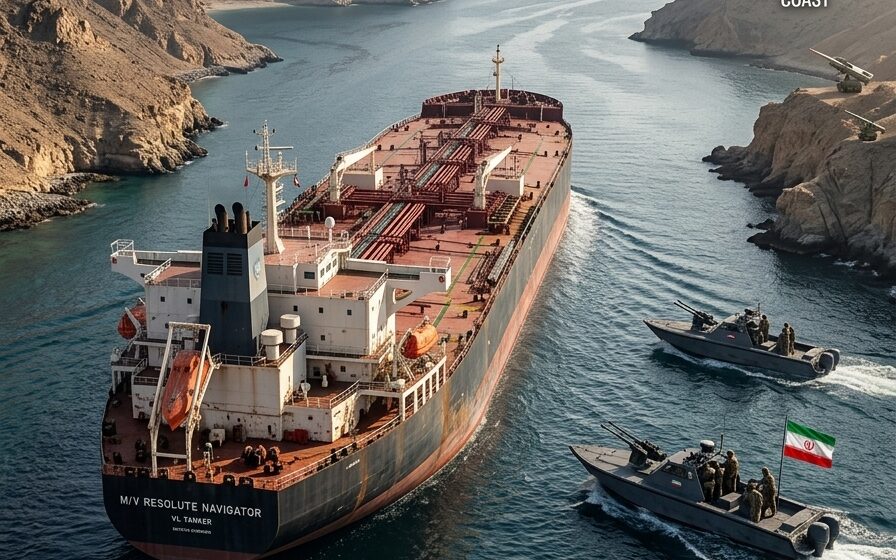

An oil tanker successfully navigated the Strait of Hormuz on Thursday despite new threats from Iran’s Revolutionary Guard, highlighting the fragile security situation around one of the world’s most important energy shipping routes.
The Liberian tanker, identified as the Stoic Warrior, made its way out of the strait using a new route close to Oman’s coast. The route was promoted by Oman and the International Maritime Organization as a temporary way to help commercial vessels move safely through the tense waterway.
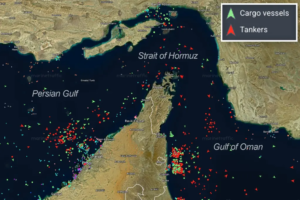
The Strait of Hormuz is a narrow but vital passage between the Persian Gulf and the Gulf of Oman. It is used to transport a major share of the world’s oil and natural gas, making any disruption there a serious concern for global energy markets.
The tanker’s passage came after Iran’s Revolutionary Guard warned ships against using routes not approved by Tehran. The Guard said the new route had not been coordinated with Iran and claimed vessel traffic outside Iran’s declared routes was dangerous and prohibited.
Despite the warning, there were no immediate reports of an incident as the Stoic Warrior passed through the area. Ship-tracking data showed several other vessels following behind, suggesting that commercial shipping may be cautiously returning to the strait.
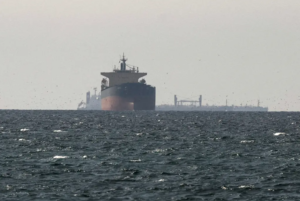
The new Oman-side route takes ships closer to the Musandam Peninsula, away from the traditional central traffic lane that has been used for decades. Maritime officials have promoted the route as a safer option while security concerns remain high.
Tensions around the strait have increased following months of conflict and uncertainty in the region. Iran has previously threatened to restrict or close the waterway, while the United States and Gulf states have warned that any attempt to block international shipping would create a major crisis.
There are also concerns about mines in the water. Reports say at least one mine was sighted after Iran’s Revolutionary Guard claimed it had mined parts of the passage during the conflict. Because of those risks, full normalization of traffic through the strait may still take time.

Energy markets are watching the situation closely. Oil prices had surged earlier when shipping through Hormuz slowed, but prices have recently fallen as more tankers began exiting the strait and supply fears eased.
U.S. officials have said millions of barrels of oil have moved through the strait in recent days, while Oman and international maritime authorities continue coordinating vessel movement. However, analysts warn that the situation remains unstable because political negotiations between Iran, the United States, and regional powers are still ongoing.
For Gulf countries, the issue is not only about oil. The strait is also a symbol of regional power and security. Any country attempting to control or restrict the passage could affect global trade, energy prices, and diplomatic relations far beyond the Middle East.
The successful passage of the Stoic Warrior may be a sign that shipping companies are willing to test the new route, but it does not mean the crisis is over. The risk of miscalculation remains high, especially if Iran’s Revolutionary Guard continues threatening vessels that follow Oman-backed navigation plans.
For now, the Strait of Hormuz remains open, but under pressure. Each successful tanker crossing may calm markets slightly, yet the waterway continues to be one of the most sensitive flashpoints in the world.