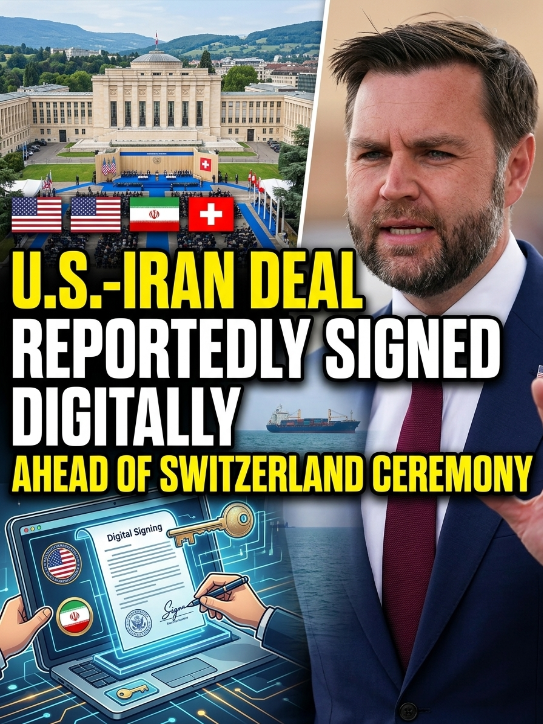
Vice President JD Vance said the United States and Iran have already signed a major agreement digitally, marking a dramatic step toward ending months of conflict and reopening the Strait of Hormuz.
According to reports, Vance said the digital signing took place on Sunday, with a formal signing ceremony expected to happen on Friday in Switzerland. The deal is being described as a major diplomatic breakthrough after months of military tension, energy-market disruption and international pressure.

The agreement is expected to help end hostilities, restore freedom of navigation through the Strait of Hormuz and begin a new round of technical negotiations involving Iran’s nuclear program and sanctions relief.
However, key details remain unclear. Reports said it is not yet confirmed whether the digital signing represented the final agreement or an initial memorandum of understanding. Officials are also still working through technical details before the formal ceremony.
Vance said the United States expects the Strait of Hormuz to remain open in a long-term, toll-free way. The waterway is one of the world’s most important oil and gas shipping routes, and its reopening could ease pressure on global energy markets.
The deal reportedly followed intense diplomatic efforts involving Pakistan and Qatar. Pakistani Prime Minister Shehbaz Sharif said the agreement included an immediate end to military operations, while Iranian officials reportedly confirmed that the text of the deal had been finalized.
Vance has also pushed back against claims that Iran would receive cash simply for signing the agreement. He said any economic benefits would depend on Iran meeting its obligations under the deal.
The agreement has been welcomed by some world leaders and financial markets, but uncertainty remains. Israel has signaled that it may not consider itself bound by parts of the agreement, especially issues linked to Hezbollah and Lebanon.
For now, the deal appears to be one of the biggest diplomatic developments in the Middle East crisis. But until the full text is released and the formal signing takes place, questions remain about how the agreement will be enforced and whether all regional actors will follow it.