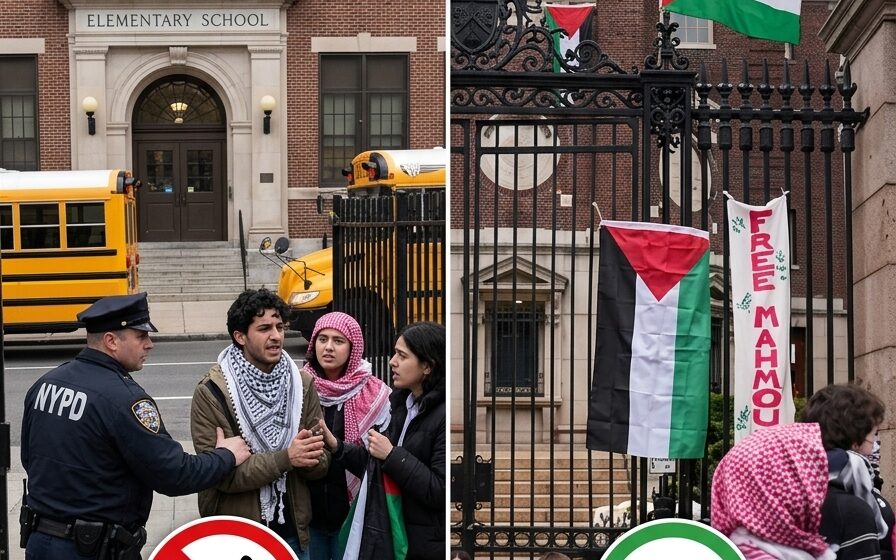

A new New York City law aimed at improving safety around schools during protests is drawing both praise and criticism because it applies to K-12 schools and childcare centers — but not colleges and universities.
The measure requires the NYPD to explain how it handles demonstrations near covered educational sites when there is a risk of harassment, intimidation, obstruction, or physical injury. Supporters say the law is designed to protect children and families while keeping public protest rights intact.
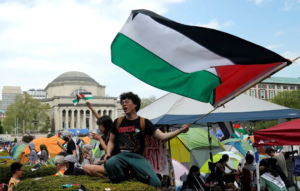
But critics argue the measure does not go far enough because it excludes college campuses, even though universities have been among the most visible locations for intense anti-Israel and pro-Palestinian demonstrations since the war in Gaza began.
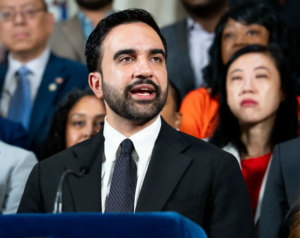
The revised legislation came after Mayor Zohran Mamdani vetoed an earlier, broader school buffer-zone bill. That earlier version included a wider definition of educational institutions, which raised concerns from civil liberties advocates and the mayor’s office about free speech and the right to protest.
In response, City Council leaders reworked the bill to focus more narrowly on early childhood education sites and most K-12 schools. Colleges, universities, libraries, museums, and teaching hospitals were left out of the revised version.
Supporters of the new law say the change was necessary to win broader support and create a clearer policy. They argue that young children should be able to enter and leave schools without fear, harassment, or blocked access, especially during politically charged demonstrations.
The law does not simply ban all protests near schools. Instead, it requires the NYPD to provide transparency about when and how security perimeters or response plans may be used. The goal, according to backers, is to create a framework that protects students while respecting constitutional rights.
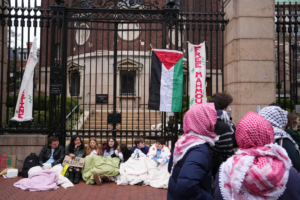
Council members who supported the measure have described it as a public-safety and transparency law, not an anti-protest law. They say the NYPD should have clear rules for responding when demonstrations create safety concerns near schools.
Jewish organizations and some parent advocates praised the measure, especially amid rising concerns about antisemitic incidents and protests near religious or educational spaces. Supporters say families should not have to walk children through hostile crowds or aggressive demonstrations to reach school.
However, the exclusion of colleges has become the biggest point of criticism. Some critics say the law avoids the places where protest conflicts have been most intense. College campuses across New York and the United States have seen encampments, building occupations, police responses, suspensions, arrests, and major political debates over Israel, Gaza, antisemitism, and free speech.
Those critics argue that leaving universities out of the law creates a gap. They say students at colleges should also be protected from intimidation, blocked entrances, or unsafe conditions.
Civil liberties groups see the issue differently. Organizations such as the New York Civil Liberties Union have warned that broad buffer-zone laws can chill political speech and give police too much discretion over protests. They argue that New York already has laws against harassment, assault, threats, trespassing, and blocking access.
Free speech advocates also worry that protest restrictions can be enforced unevenly. They say politically unpopular views could be targeted more aggressively, especially during heated debates about foreign policy, policing, abortion, LGBTQ rights, immigration, and religion.
That concern is why the revised law attempts to avoid a blanket protest ban. Instead, it focuses on NYPD planning, transparency, and safety procedures. But the balance remains controversial.
The debate is part of a larger struggle in New York over how to respond to demonstrations near sensitive locations. Earlier this year, the City Council also advanced measures involving houses of worship, while New York State approved a separate law making it a crime to block access to religious institutions or intimidate worshippers entering or leaving.
That state law allows police to establish 50-foot security perimeters around houses of worship during certain demonstrations. Supporters said it was needed after disruptive protests outside synagogues and other religious institutions. Civil liberties groups warned that the law could still create constitutional concerns if applied too broadly.
The new school-related law now sits in the middle of that same debate. On one side are parents, religious groups, and public-safety advocates who say students need clear protection from intimidation. On the other side are civil liberties advocates who warn that protest rights must not be weakened, even when the speech is offensive or controversial.
Mayor Mamdani’s role has also made the issue politically sensitive. His veto of the earlier version angered some Jewish leaders and moderate council members, who said he was failing to respond strongly enough to antisemitic intimidation. His supporters argued that he was protecting constitutional rights and avoiding an overly broad policing measure.
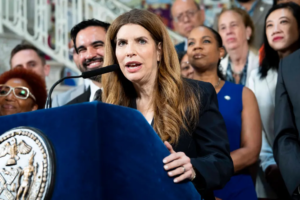
The revised law appears to be a compromise. It narrows the scope, removes colleges, and focuses on K-12 schools and childcare centers. But because of that narrowing, both sides still have complaints.
Supporters who wanted stronger protections say the law leaves universities vulnerable. Free speech advocates say even the narrowed version could still invite over-policing near schools.
For families, the practical question is simple: will the law make it easier for children to enter school safely during protests?
For protesters, the question is whether the NYPD will enforce the law fairly and avoid unnecessary restrictions on peaceful political speech.
For city leaders, the challenge is finding a balance between two rights: the right to protest and the right of students to attend school without intimidation or obstruction.
New York’s new law may not end the debate, but it marks another step in the city’s attempt to manage public demonstrations during one of the most politically charged periods in recent memory.
As protests continue across the city, the law’s real impact will depend on how the NYPD applies it, how clearly the city explains the rules, and whether officials can protect both public safety and free speech at the same time.