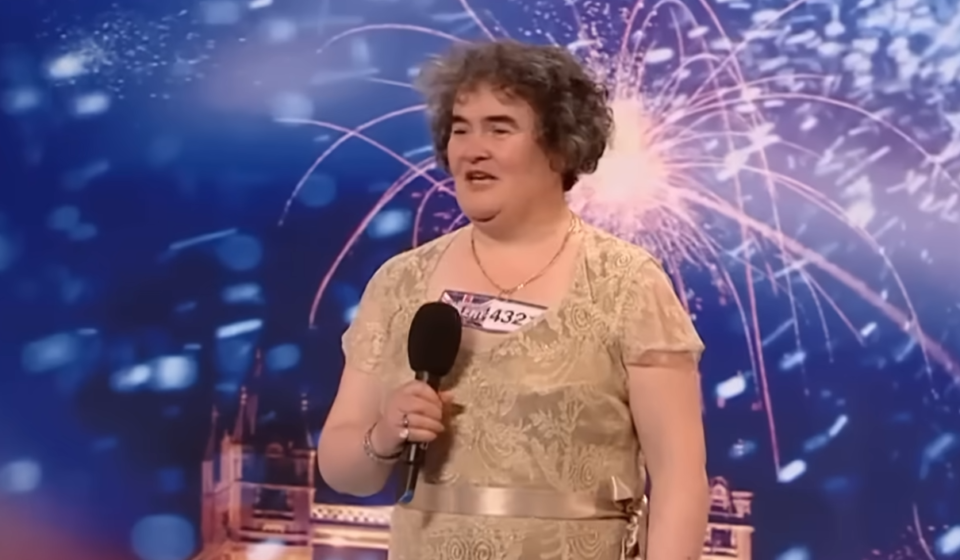

Susan Boyle’s 2009 Britain’s Got Talent audition remains one of the most powerful and emotional moments in talent show history.
Before the world knew her name, Boyle walked onto the stage as a 47-year-old Scottish woman with a quiet dream of becoming a professional singer. At first, many people in the audience did not seem to know what to expect. The atmosphere was uncertain, and some viewers appeared skeptical before she even began.
Then she sang.
Boyle performed “I Dreamed a Dream” from Les Misérables, and within seconds, the room changed completely. Her voice was strong, emotional, and full of confidence. The judges looked stunned, the audience reacted with surprise, and what began as a simple audition quickly became a global viral moment.
The performance became famous because it challenged expectations. Talent shows often focus on image, youth, confidence, and stage presence before a contestant even performs. Boyle’s audition reminded viewers that real talent can appear in unexpected places and that no one should be judged before they are given a chance.
The song choice also gave the moment extra emotional weight. “I Dreamed a Dream” is a song about hope, disappointment, and longing. For Boyle, who had carried her dream for years before reaching a major stage, the performance felt deeply personal. That connection made the audition even more moving for millions of viewers.
The judges’ reactions became part of the story. Simon Cowell, Amanda Holden, and Piers Morgan appeared surprised as Boyle’s voice filled the theater. The audience, which had been uncertain at first, quickly changed into loud applause and support.
After the audition aired in April 2009, the clip spread rapidly online and became one of the defining viral videos of the early YouTube era. Millions of people around the world watched, shared, and discussed the performance, turning Boyle into an international sensation almost overnight.
Although Boyle did not win Britain’s Got Talent, she finished as runner-up and went on to build a successful music career. Her debut album, also titled I Dreamed a Dream, became a major commercial success and helped prove that her audition was not just a one-time viral surprise.
Her story connected with people because it felt universal. Many viewers saw Boyle as someone who had waited for the right moment to be heard. Her success gave hope to people who felt overlooked, underestimated, or too late to chase their own dreams.
Years later, the audition still feels powerful because it is simple and honest. There were no complicated stage effects, no dramatic costume, and no need for a huge production. The strength of the moment came from Boyle’s voice and the emotional surprise of hearing it for the first time.
Susan Boyle’s audition also changed how people talked about talent shows. It showed that a performance could become bigger than the competition itself. It could become a cultural moment — one that viewers remember, replay, and share across generations.
Her journey after Britain’s Got Talent added more meaning to the story. Boyle released multiple albums, performed internationally, returned to television, and remained closely connected to the song that introduced her to the world.
The performance is still remembered not only because of the singing, but because of what it represented. It was a reminder that dreams can survive quietly for years before finally reaching the right stage.
For many fans, Susan Boyle’s “I Dreamed a Dream” audition remains a symbol of courage, patience, and unexpected greatness. She walked onto the stage as an unknown singer and left as one of the most talked-about performers in the world.
More than a decade later, the audition continues to inspire viewers because its message still feels fresh: talent has no age limit, dreams can arrive late, and one unforgettable performance can change a life forever.