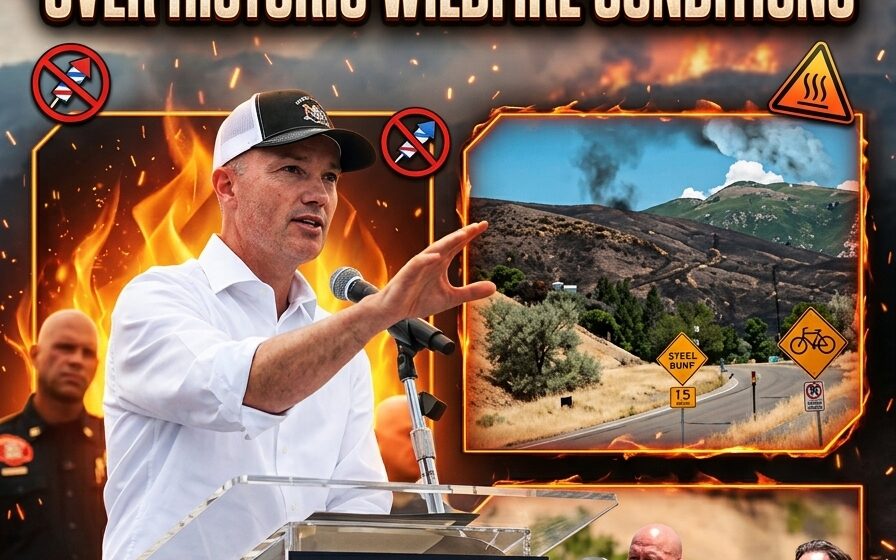

Utah Governor Spencer Cox has announced temporary statewide fireworks restrictions for the July 4 holiday as the state faces what officials describe as historic wildfire conditions.
The executive order comes during one of Utah’s most dangerous wildfire seasons in recent memory. State officials say prolonged drought, dry vegetation, strong winds, and extreme heat have created conditions where even a small spark could quickly become a major fire.
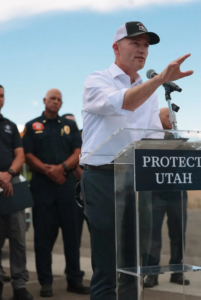
The order gives the state forester authority to restrict fireworks statewide during the Independence Day holiday period. It also allows cities and towns, working with local fire officials, to designate limited areas where fireworks may still be used safely.
The restrictions apply through July 5. State officials said they will review wildfire conditions again before deciding whether similar restrictions will be needed for Pioneer Day celebrations later in July.
Governor Cox said the decision was difficult because many Utah families consider fireworks an important part of their July 4 celebrations. However, he said this year’s fire behavior is unlike anything many experienced firefighters have seen before.
“This year is different,” Cox said while explaining the emergency action. Officials warned that Utah’s firefighting resources are already stretched thin because crews are battling multiple large fires across the state.
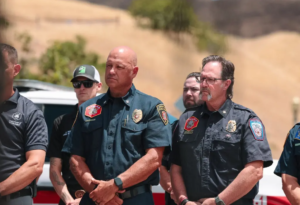
Since the beginning of the fire season, Utah has recorded hundreds of wildfires. More than 75 percent of them have been human-caused, according to state officials. That has made prevention a top priority ahead of the busy holiday weekend.
Fire officials say the danger is especially severe because vegetation across much of the state is critically dry. When grass, brush, and trees reach that condition, sparks from fireworks, campfires, cigarettes, equipment, or vehicles can spread quickly and become difficult to control.
The state is also increasing patrols in high-risk areas. Public safety officials warned that anyone who illegally starts a wildfire could face serious criminal and civil consequences.
Local communities are now being asked to make decisions based on their own fire risk. Some cities may choose to ban fireworks completely, while others may allow them only in carefully selected safe zones. Residents are being urged to check local rules before lighting any fireworks.
The move has drawn mixed reactions. Supporters say the restrictions are necessary to protect homes, lives, firefighters, and natural landscapes. Critics argue that fireworks are a long-standing Independence Day tradition and that local governments should have more control over celebrations.
However, officials say the situation is too dangerous to ignore. Several fires are already burning in Utah, and fire crews have warned that multiple new starts during the July 4 weekend could overwhelm emergency response teams.
The restrictions also come as the wider American West faces an intense wildfire season. Hot temperatures, low humidity, and drought have increased fire danger across several states, forcing evacuations and stretching firefighting resources.
Utah residents are being encouraged to attend professional community fireworks shows where they are still allowed, rather than lighting personal fireworks at home. Officials say organized displays can be monitored more safely than thousands of individual firework launches in neighborhoods.
Authorities are also urging people to sign up for emergency alerts, report smoke or suspicious activity immediately, follow evacuation orders, and avoid any behavior that could start a fire.

The temporary fireworks restrictions are intended to reduce preventable fire starts during one of the riskiest weekends of the year. For state leaders, the message is clear: this year, public safety must come before tradition.
As Utah heads into the July 4 holiday, officials say the goal is simple — prevent new fires, protect communities, and make sure firefighters are not overwhelmed by avoidable emergencies.