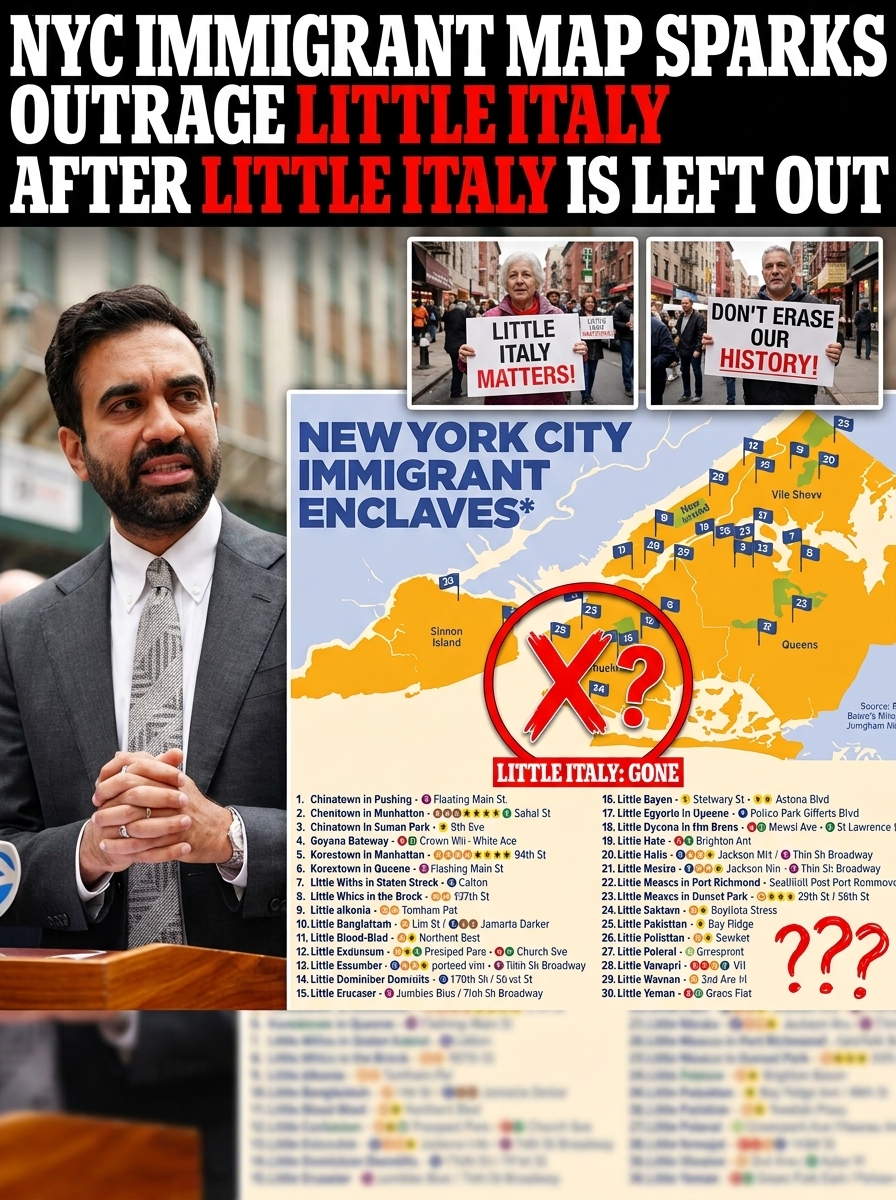
A New York City immigrant neighborhood map promoted under Mayor Zohran Mamdani’s administration has sparked backlash after critics noticed that Little Italy was not included among the highlighted communities.
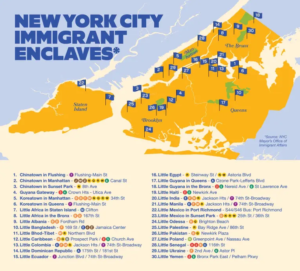
The map, titled “New York City Immigrant Enclaves,” was created as part of the city’s Immigrant Heritage Month celebration. It features dozens of communities across the five boroughs, including neighborhoods connected to Chinese, Dominican, Haitian, Mexican, Polish, Korean, Pakistani, Bangladeshi, Yemeni, Caribbean, and other immigrant groups.
However, the omission of Little Italy quickly drew criticism from Italian-American leaders and local officials. Critics argued that Little Italy is one of the most recognizable immigrant neighborhoods in the United States and remains a major symbol of Italian-American history in New York City.
Joseph Scelsa, founder of the Italian American Museum, called the omission a serious mistake, saying Little Italy has played an important role in the city’s immigrant story for generations. Other critics also questioned why historic Irish and Jewish immigrant communities were not included on the map.
Councilwoman Joann Ariola criticized the decision and said neighborhoods such as Little Italy and Woodlawn, known for its Irish heritage, deserve recognition in any city project celebrating immigrant identity.
The controversy also drew concern from members of the Jewish community after critics noted that Orthodox Jewish neighborhoods such as Borough Park were not included. Some commentators argued that leaving out those communities gave an incomplete picture of New York’s immigrant legacy.
City Hall defended the project, saying the map was designed to highlight neighborhoods with large foreign-born populations and was not meant to represent every ethnic, religious, or historic community in the city. A spokesperson also said the project began under a previous administration and that more neighborhoods may be added in future updates.
The debate shows how sensitive immigrant history can be in a city built by generations of newcomers. New York is home to millions of immigrants, and many neighborhoods carry deep cultural meaning even if their current demographics have changed over time.
Little Italy, centered around Mulberry Street in Manhattan, remains a major tourist destination and cultural landmark. Although the neighborhood is smaller today than it once was, it continues to host Italian-American institutions, restaurants, festivals, and historic sites connected to the immigrant experience.

Supporters of the map say it helps celebrate newer immigrant communities that are shaping the city today. Critics say the city should also honor older immigrant neighborhoods that helped define New York’s identity in the 19th and 20th centuries.
For now, the backlash has put pressure on City Hall to revise or expand the map. The controversy also raises a broader question: how should New York City balance modern demographic data with historic immigrant heritage when telling the story of its communities?