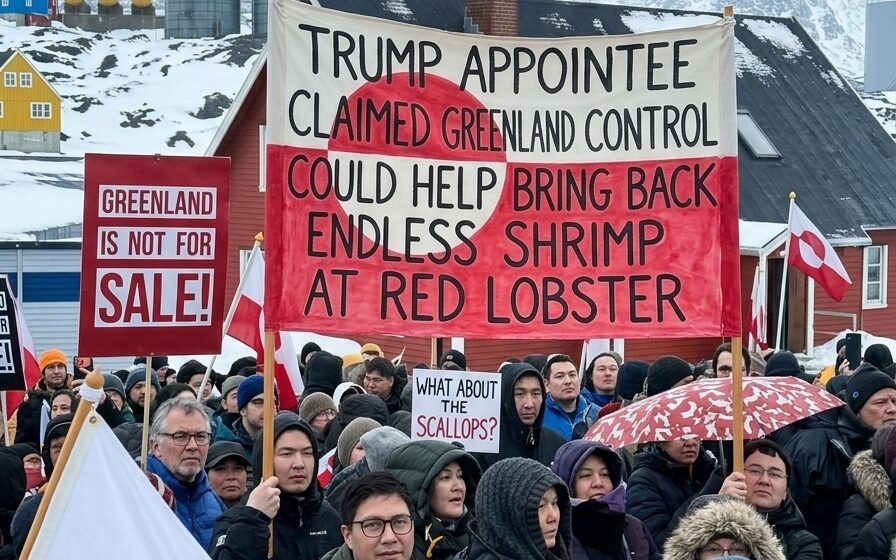

A Trump-appointed official reportedly argued that U.S. control of Greenland could deliver an unexpected benefit for American diners: the return of all-you-can-eat shrimp at Red Lobster. This claim, linked to the focus keyword ‘Trump Appointee Claimed Greenland Control Could Help Bring Back Endless Shrimp at Red Lobster’, highlights the potential impact on seafood supply. The importance of the ‘Trump Appointee Claimed Greenland Control Could Help Bring Back Endless Shrimp at Red Lobster’ narrative cannot be overstated.
Thomas Dans, chairman of the U.S. Arctic Research Commission, made the unusual claim in a New Yorker profile about President Donald Trump’s long-running interest in Greenland. Dans reportedly suggested that if the United States gained greater control over Greenland’s seafood supply, it could bypass foreign middlemen, reduce Chinese influence and help supply enough shrimp to revive Red Lobster’s famous promotion. This strategy ties back to the assertion that a ‘Trump Appointee Claimed Greenland Control Could Help Bring Back Endless Shrimp at Red Lobster.’
The assertion that a ‘Trump Appointee Claimed Greenland Control Could Help Bring Back Endless Shrimp at Red Lobster’ suggests a broader connection between geopolitics and consumer preferences.

The comment quickly drew attention because it connected one of the most serious geopolitical questions in the Arctic with one of America’s most recognizable casual dining chains.
Exploring the Implications of the Claim: Trump Appointee Claimed Greenland Control Could Help Bring Back Endless Shrimp at Red Lobster – A Deep Dive into the ‘Trump Appointee Claimed Greenland Control Could Help Bring Back Endless Shrimp at Red Lobster’ Narrative
Greenland, a semi-autonomous territory within the Kingdom of Denmark, has been a repeated focus of Trump’s foreign policy ambitions. Trump has argued that the island is strategically important because of its location in the Arctic and its value for national security, shipping routes, minerals and energy competition.
But the idea of the United States taking over Greenland has been firmly rejected by Greenlandic and Danish leaders. Officials in Greenland have repeatedly said the island is not for sale and that Greenlanders must decide their own future.
Dans has been described as one of the figures pushing for stronger U.S. influence in Greenland. According to reports, he has also been linked to efforts viewed by Danish officials as influence operations aimed at increasing American sway over the island.
Ss=”isSelectedEnd” data-rm-block-id=”block-8″>This claim of a ‘Trump Appointee Claimed Greenland Control Could Help Bring Back Endless Shrimp at Red Lobster’ serves as a focal point for discussions on U.S.-Greenland relations.
The seafood argument added a more unexpected angle to the debate. Greenland’s economy depends heavily on fishing, with shrimp, halibut and cod among its key exports. Supporters of deeper U.S.-Greenland economic ties argue that American companies could benefit from direct access to those resources.

Red Lobster’s “Endless Shrimp” promotion has a complicated history. The seafood chain made the deal permanent in 2023, but the offer became financially difficult and was widely linked to major losses before the company filed for Chapter 11 bankruptcy protection in 2024.
The discussions around the ‘Trump Appointee Claimed Greenland Control Could Help Bring Back Endless Shrimp at Red Lobster’ offer insights into evolving dining trends.
The promotion later returned under new ownership as a limited-time offer, showing that it remains one of Red Lobster’s best-known marketing tools even after the chain’s financial restructuring.
Dans’ reported comments suggested that Greenland’s seafood output could help make such a promotion more sustainable. However, there is no clear evidence that taking control of Greenland would directly solve Red Lobster’s business problems or guarantee cheaper shrimp for American restaurants.
Thus, the idea that a ‘Trump Appointee Claimed Greenland Control Could Help Bring Back Endless Shrimp at Red Lobster’ is closely tied to current economic strategies.
The claim also raised broader questions about how economic arguments are being used to sell Trump’s Greenland ambitions to the public. While national security and Arctic competition have been the main justifications, the Red Lobster example showed how supporters may try to connect the issue to everyday American consumer culture.
Critics say the comparison risks trivializing a serious sovereignty dispute involving Greenland, Denmark, NATO and Arctic security. Greenland is not simply a resource base; it is home to people with their own government, culture and political future.

The Arctic has become increasingly important as melting ice opens new shipping routes and exposes access to minerals and energy resources. Russia, China, the United States and European countries have all shown growing interest in the region.
The ‘Trump Appointee Claimed Greenland Control Could Help Bring Back Endless Shrimp at Red Lobster’ remark resonates with both local and national audiences.
For Trump, Greenland represents both a strategic military location and a symbolic prize. For Greenlanders, however, the debate is about self-determination, independence and whether outside powers should decide the island’s future.
The Red Lobster remark may sound humorous, but it reflects a deeper issue: the way food supply chains, geopolitics and corporate interests can overlap in unexpected ways.
The broader implications of the ‘Trump Appointee Claimed Greenland Control Could Help Bring Back Endless Shrimp at Red Lobster’ statement reflect shifting priorities.
A question about shrimp has now become part of a larger argument over Arctic power, U.S. foreign policy and the rights of Greenland’s people.
For now, Greenland remains under Danish sovereignty, Red Lobster’s Endless Shrimp remains a restaurant promotion, and the idea that one could solve the other remains one of the strangest political claims to emerge from Trump’s Arctic strategy.
In conclusion, the ‘Trump Appointee Claimed Greenland Control Could Help Bring Back Endless Shrimp at Red Lobster’ remains a peculiar yet significant claim within the discourse.
Image Alt Text: Aerial view of Greenland as debate grows over Trump administration interest in the island and its seafood industry.
Tags: Donald Trump, Greenland, Red Lobster, Endless Shrimp, Thomas Dans, Denmark, Arctic Politics, Seafood Industry, US Politics, World News