Senators Tom Cotton and Mike Lee Urge Trump Administration to Bar Chinese Nationals From U.S. National Labs

A group of Republican senators led by Tom Cotton and Mike Lee is calling on the Trump administration to block Chinese nationals from accessing U.S. national laboratories, arguing that the current system poses significant national security risks. Senators Tom Cotton and Mike Lee Urge Trump Administration to Bar Chinese Nationals From U.S. National Labs
The lawmakers sent a letter to Energy Secretary Chris Wright urging the Department of Energy to adopt a policy preventing Chinese citizens from obtaining access to national laboratory facilities, research programs, technology, and sensitive information.
According to the senators, the request is tied to concerns about protecting America’s technological advantage in artificial intelligence and other emerging fields. They specifically referenced the Department of Energy’s “Genesis Mission,” an initiative designed to accelerate AI-driven scientific research and strengthen U.S. competitiveness against China.
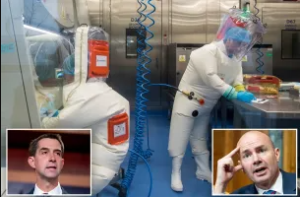
National Security Concerns
Ss=”rank-math-highlight” style=”background-color: #fee894″>Senators Tom Cotton and Mike Lee Urge Trump Administration to Bar Chinese Nationals From U.S. National Labs
The senators argue that allowing Chinese nationals to participate in research at national laboratories creates opportunities for intellectual property theft and technology transfer that could benefit the Chinese government.
In their letter, the lawmakers stated that China has repeatedly attempted to acquire American research and technological innovations through academic partnerships, research exchanges, and other channels. They contend that continued access to national laboratories undermines efforts to maintain U.S. leadership in artificial intelligence and advanced scientific research.
The proposal would affect the network of Department of Energy laboratories that conduct research on energy, supercomputing, nuclear security, quantum science, advanced materials, and artificial intelligence.

Debate Over Foreign Researchers
Supporters of tighter restrictions point to previous congressional hearings that examined the risk of espionage at U.S. laboratories. Lawmakers and former national security officials have warned that foreign governments, particularly China, have sought to gain access to sensitive research conducted with American taxpayer funding.
During a Senate hearing last year, officials testified that Chinese-linked researchers had been involved in projects related to advanced technologies and that stronger vetting procedures were needed to protect national security.
Critics of an outright ban, however, argue that many foreign-born scientists play an important role in American innovation and scientific discovery. Universities, research institutions, and some scientific organizations have warned that broad restrictions could reduce international collaboration and make it harder for the United States to attract top talent.

Growing Focus on China Policy
The latest push reflects a broader trend in Washington toward tougher policies on China. In recent years, lawmakers from both parties have supported measures aimed at limiting China’s access to advanced technologies, AI chips, sensitive research, and critical infrastructure investments.
Cotton has been one of the Senate’s most vocal advocates for restricting Chinese access to sensitive U.S. technology and research, while Lee has increasingly focused on national laboratory security as chairman of the Senate Energy and Natural Resources Committee.
The senators argue that stronger protections are necessary as the United States and China compete for leadership in artificial intelligence, quantum computing, biotechnology, and other strategic industries.

What Happens Next?
The Department of Energy has not yet announced whether it will adopt the proposed restrictions. Any policy change could face legal, diplomatic, and scientific scrutiny because of its potential impact on international research cooperation.
For now, the proposal remains part of a broader debate over how the United States should balance national security concerns with the need to maintain its position as a global leader in scientific research and innovation.
Image Alt Text: Senators Tom Cotton and Mike Lee speak about national security concerns involving Chinese access to U.S. national laboratories.
Tags: Tom Cotton, Mike Lee, China, Department of Energy, National Laboratories, Artificial Intelligence, National Security, U.S. Senate, Technology Policy, US News