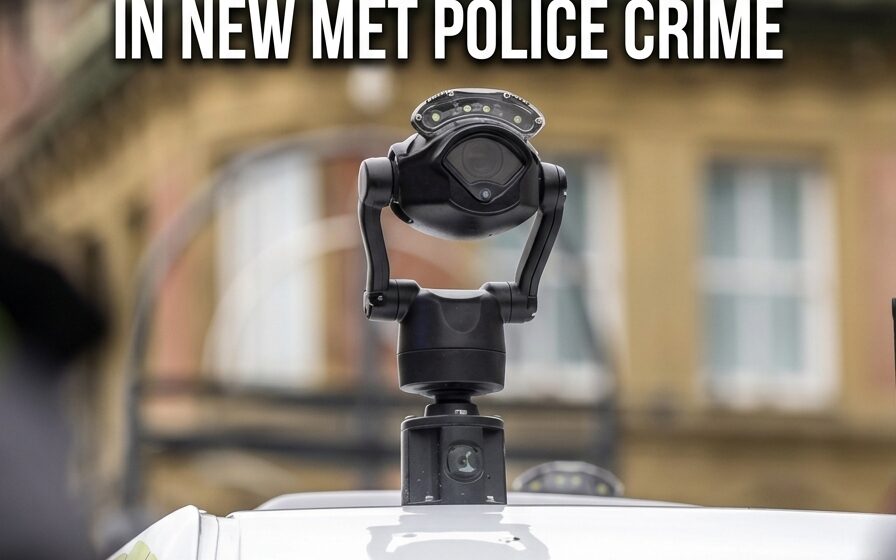

Live facial recognition cameras are set to be introduced across London’s West End and Soho as part of a major Metropolitan Police plan to cut crime in some of the capital’s busiest areas. This initiative, titled ‘Facial Recognition Cameras Heading to London’s West End in New Met Police Crime Crackdown’, aims to enhance public safety.
Implementing Facial Recognition Cameras Heading to London’s West End in New Met Police Crime Crackdown
Facial Recognition Cameras Heading to London’s West End in New Met Police Crime Crackdown are expected to significantly impact public safety in these areas.
The force says the new cameras will be rolled out by the end of 2026, following what it described as a successful six-month pilot in Croydon.

The technology, known as live facial recognition, scans people’s faces in real time and compares them with a police watchlist. If the system suggests a possible match, officers on the ground are alerted and decide whether to stop the person.
The deployment of Facial Recognition Cameras Heading to London’s West End in New Met Police Crime Crackdown is a strategic move in combating crime.
Importance of Facial Recognition Cameras Heading to London’s West End in New Met Police Crime Crackdown
The Met says the cameras will be used in high-crime areas, including parts of the West End and Soho, where large numbers of shoppers, tourists, workers and nightlife visitors pass through every day.
With the introduction of Facial Recognition Cameras Heading to London’s West End in New Met Police Crime Crackdown, the Met aims to foster a safer environment for all.
Unlike older van-based deployments, the new cameras will be static and may be mounted on existing infrastructure such as lampposts. However, police say the cameras will not stay permanently in one location and can be moved when crime patterns change.
Met Commissioner Sir Mark Rowley said the technology has become one of the most important advances in modern policing. He argued that live facial recognition helps officers identify wanted suspects, including people accused of serious violence, sexual offences and shoplifting.
Officers will be better equipped thanks to technologies like Facial Recognition Cameras Heading to London’s West End in New Met Police Crime Crackdown.
The Met said its Croydon pilot led to 173 arrests during 24 operations between October 2025 and March 2026. More than 470,000 people passed the cameras during the trial, and police said there was only one false alert, which resulted in a brief stop before the person was allowed to continue.
The force also says it has made more than 2,000 arrests using live facial recognition since the start of 2024.

Police leaders say the technology is designed to support officers, not replace them. According to the Met, watchlists are created for specific deployments, reviewed in advance and deleted afterwards. The force also says people who do not match the watchlist are not retained by the system.
Supporters of the rollout argue that the West End needs stronger tools to deal with theft, robbery, violent crime and offences linked to the night-time economy. Business groups have also welcomed the plan, saying it could help protect visitors, workers and local businesses.
The community’s backing for Facial Recognition Cameras Heading to London’s West End in New Met Police Crime Crackdown illustrates a collective desire for enhanced safety.
Westminster City Council has also signaled support for using new technology as part of wider public safety measures in the area.
But the expansion has triggered serious concern from privacy and civil liberties campaigners. Critics argue that live facial recognition turns public streets into surveillance zones and scans thousands of innocent people who are not suspected of any crime.
Despite concerns, the advantages of Facial Recognition Cameras Heading to London’s West End in New Met Police Crime Crackdown may outweigh the drawbacks.
Campaigners have also raised concerns about errors, racial bias, data protection and the lack of a dedicated national law specifically regulating live facial recognition.
Civil liberties groups say people should not have to submit to biometric checks simply because they are shopping, working or walking through central London.
The Met has rejected claims that the technology amounts to mass surveillance. It says deployments are targeted, time-limited and intelligence-led, and that officers remain responsible for decisions on whether to approach or arrest someone.
As the Met continues its efforts, Facial Recognition Cameras Heading to London’s West End in New Met Police Crime Crackdown remain at the forefront of discussions about modern policing.
The rollout comes after the Met won a High Court challenge over its use of live facial recognition. The court found that the force’s policy contained sufficient safeguards and did not breach the claimants’ human rights.
Even with that ruling, the debate is far from over. Facial recognition remains one of the most controversial technologies in British policing, with supporters calling it a powerful crime-fighting tool and opponents warning it could normalize biometric surveillance in public spaces.
Ultimately, the future of Facial Recognition Cameras Heading to London’s West End in New Met Police Crime Crackdown will depend on public trust and effective implementation.
The West End rollout will be closely watched because of the area’s size, visibility and high foot traffic. If the plan is considered successful, the Met intends to work with councils to expand static facial recognition cameras into more London crime hotspots from 2027.
Facial Recognition Cameras Heading to London’s West End in New Met Police Crime Crackdown will play a crucial role in the Met’s ongoing strategies against crime.
For now, the Met says the goal is simple: catch wanted offenders faster and make busy areas safer. Critics say the bigger question is whether that safety comes at too high a cost to privacy.
Image Alt Text: Facial Recognition Cameras Heading to London’s West End in New Met Police Crime Crackdown are set to enhance public safety.
Tags: London, Met Police, Facial Recognition, West End, Soho, UK News, Crime, Privacy, Civil Liberties, Technology