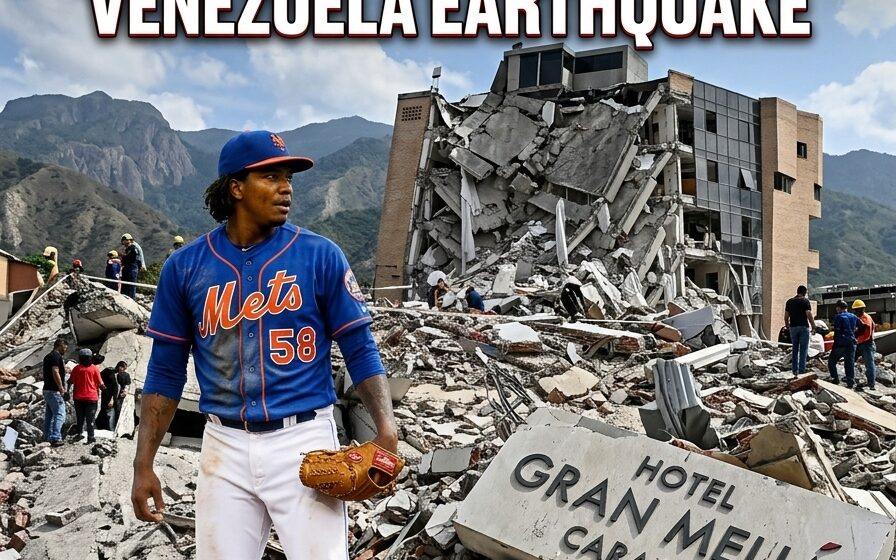

Former New York Mets pitcher Jenrry Mejía says he narrowly escaped death when a powerful earthquake struck Venezuela and caused the hotel he was staying in to collapse.
The 36-year-old former MLB player was in La Guaira, Venezuela, where he has been playing for the Delfines de La Guaira in the Venezuelan Major League. According to reports, Mejía had just finished working out in the hotel gym and was heading back to his room when the earthquake hit.
Mejía reportedly entered an elevator intending to go to the sixth floor. Instead, the elevator unexpectedly took him down to the ground level. Moments later, the building began collapsing.
The former Mets pitcher later described the moment as divine intervention, saying he believes the sudden elevator movement saved his life. Had he reached the upper floor as planned, he may have been trapped or killed when the structure came down.
After escaping, Mejía reportedly helped an elderly man get out of the building. He said he believes they may have been among the only survivors from that hotel, although official confirmation about all victims from the building has not been fully released.
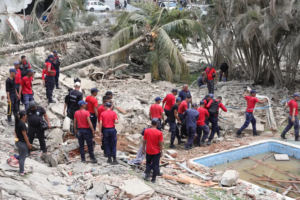
The earthquake caused major destruction across northern Venezuela, with La Guaira among the hardest-hit areas. The region sits near the country’s main international airport and suffered severe damage as buildings collapsed, roads were blocked, and emergency teams searched through rubble for survivors.
The disaster was caused by two powerful earthquakes that struck within seconds of each other. Early reports said the first quake measured around magnitude 7.2, followed by a stronger 7.5 tremor less than a minute later. The shaking was felt across several regions, including Caracas.
Rescue teams have been racing against time to find survivors in collapsed buildings. Officials have reported hundreds of deaths and thousands of injuries, while warning that casualty numbers may continue to rise as more areas are searched.
Mejía said he lost all of his belongings in the hotel collapse, including his passport. With flights disrupted and the airport damaged, he is reportedly stranded in Venezuela while authorities and rescue crews continue emergency operations.
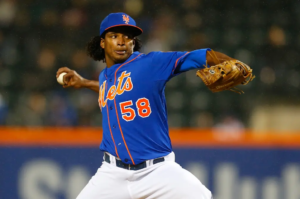
The story has drawn attention from baseball fans because Mejía was once one of the most notable young pitchers in the Mets organization. He made his Major League Baseball debut with New York in 2010 and later became the team’s closer during the 2014 season.
His MLB career was later derailed by multiple drug test failures, leading to a lifetime ban from Major League Baseball. He was eventually reinstated, but he never returned to the same level of prominence in the majors.
In recent years, Mejía has continued playing professionally outside MLB, including in winter and international leagues. His survival story in Venezuela has now placed him back in the headlines for a very different reason.
The earthquake has deeply affected Venezuela’s sports community. Several athletes have used social media to search for relatives, ask for help, or share updates from damaged areas. The disaster has also disrupted teams, players, stadium operations, travel, and local communities connected to baseball and football.
For Mejía, the escape from the hotel collapse was a terrifying reminder of how quickly life can change. What began as a normal workout at a team hotel became a fight for survival within minutes.
As Venezuela continues rescue and recovery operations, Mejía’s story has become one of the most dramatic personal accounts to emerge from the disaster. While many families are still waiting for news of missing loved ones, his survival offers one rare moment of relief amid a national tragedy.
Authorities continue to urge people to stay away from damaged buildings, follow emergency instructions, and prepare for possible aftershocks.
The full scale of the disaster is still unfolding, but Mejía’s near-death escape shows the human impact behind the numbers: lives interrupted, homes destroyed, and survivors left with only seconds between safety and tragedy.